Cybersecurity and AI Capacity Building
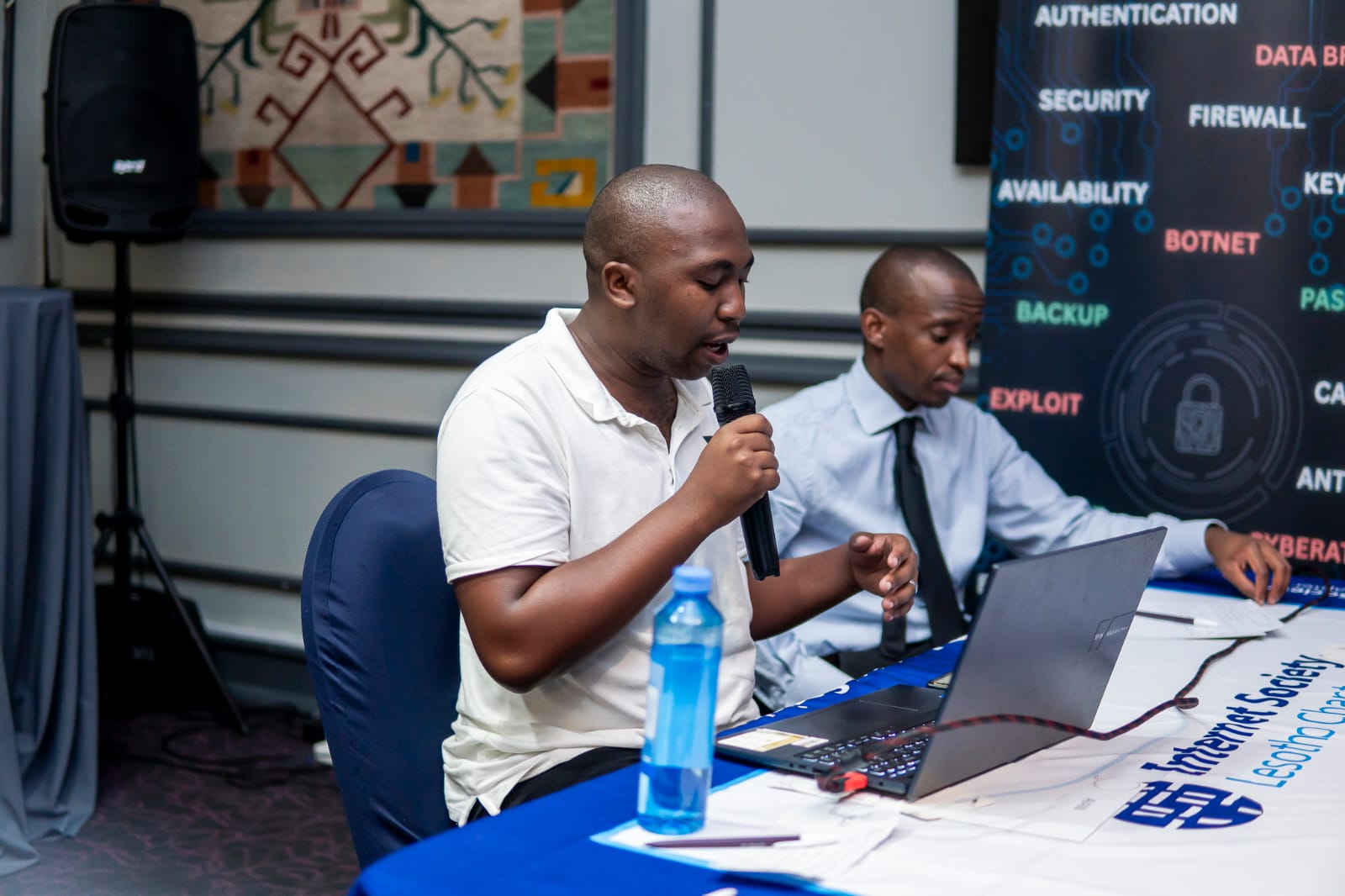
On 12 November 2025 at AVANI Maseru, Internet Society Lesotho Chapter hosted the first of a series of AI and Cybersecurity capacity building workshops. This series of workshops brought together Parliamentarians, Military, Police, and Legal Experts.
The primary objective was to build a foundational understanding of the transformative potential and profound threats posed by Artificial Intelligence (AI) in the cybersecurity domain. The sessions provided a crucial platform for cross-sectoral dialogue, emphasizing the need for collaborative policy, strategic doctrine, and legal frameworks. Key takeaways include the recognition of AI as a dual-use technology, the critical importance of securing national digital infrastructure, and the urgent need to address the ethical and legal implications of autonomous systems. The workshop concluded with a set of actionable recommendations for legislative, operational, and legal communities.
Key Findings and Takeaways:
A clear need was identified for a common lexicon and understanding of AI risks and opportunities among policymakers, operators, and legal experts.
There was unanimous concern about the vulnerability of power, water, and financial systems to AI-augmented cyberattacks.
Participants recognized deepfakes and bot networks as a primary threat to social cohesion and democratic processes, requiring new countermeasures beyond traditional media regulation.
The current legal framework is ill-equipped to handle issues of algorithmic bias and other negative effects of AI like hallucination etc. A proactive, rather than reactive, legislative approach is needed.
The scenario exercise underscored that siloed responses are ineffective. A whole-of-nation approach, integrating intelligence, operational, and legal perspectives, is critical for resilience.
Recommendations
For Parliamentarians:
Prioritize the drafting and passage of a national AI Strategy with a dedicated pillar on security and ethics.
The scenario exercise underscored that siloed responses are ineffective. A whole-of-nation approach, integrating intelligence, operational, and legal perspectives, is critical for resilience.
Champion public awareness campaigns on digital literacy and the threats of disinformation.
For Military and Defence Establishments:
Develop a vision and integrate formal doctrine for the use of AI in defence and cyber operations.
Invest in recruiting and training a new generation of "AI-savvy" personnel and conduct regular cross-branch exercises.
Mandate strict security standards for AI systems and components integrated into defence networks.
For Police and Law Enforcement:
Equip cybercrime units with advanced tools and training to investigate AI-facilitated crimes.
Develop and publish strict ethical guidelines for the use of predictive policing and facial recognition technologies to maintain public trust.
Strengthen formal channels for information sharing on cyber threats with national cybersecurity agencies and the military.
For the Legal Community:
Expedition of the Lesotho Computer Crimes and Cybersecurity Bill.
Professional Development: Introduce mandatory continuing legal education on technology law, AI, and cybersecurity for judges and prosecutors.
International Law Engagement: Actively contribute to international forums developing norms and laws for state behavior in cyberspace and AI.
The workshop successfully achieved its goal of raising awareness and initiating a critical cross-sectoral dialogue on AI and cybersecurity. The engaged participation from all stakeholder groups demonstrated a shared understanding of the high stakes involved. The path forward requires sustained effort, strategic investment, and a commitment to collaboration.